Wednesday, April 21, 2010
Reflections on Marx Presentation
Last week, my group shared a presentation about Marxism with the class. Although many of us were not too familiar with Marx's theories, we decided to come up with a lesson that would help not only the class but also help us understand his ideas better. Even though we all pitched in and helped each other, my specific assignment was the end of Marx's work entitled "Capital". I found the ending to be rather open-ended. Instead of projecting my opinions to the class, I wanted to see what their thoughts were about the situations of both Robinson Crusoe and the Middle Ages. The discussion didn't quite go as I planned, and I rarely referred to my sections of the powerpoint because I let my nerves get the best of me. However, I do believe our unique presentation got everything reflecting on Marx's ideas. I think as a group we worked great together and hopefully we all took something away from the project!

Tuesday, April 13, 2010
Giving Up Labor Power Leads to More Real Housewives
A rich, extravagant, jewel-adorned housewife. Groups of constructor workers slaving away at this beautiful 6 bedroom 7 bath home in Coto De Caza, a suburb of Orange County, CA. What exactly brings these too contrasts together? Karl Marx would suggest that it is the finished product that brings these two opposites together; the constructors workers who built this house have created a nice paycheck for Jeana Keogh, a character on the popular reality show "Real Housewives of Orange County". This "partnership" (for lack of a better word) consists of the laborers (i.e the constructor workers) producing a home for Jeana Keogh to sell. In exchange for the workers' labor they are able to take home a reasonable salary enough for the necessities of life. Meanwhile, Jeana will attempt to sell this home to some upper crust family of the O.C., most likely taking home a commission of around five or six figures. How ironic, right? These workers put their time, energy, and sweat into creating a home that is sold for millions of dollars, only receiving the bare minimum of wages while the lucky real estate agent can spend her funds on not only her beautiful home in Coto De Caza but also her jewelery collection (see video above).
According to Marx, this situation is common in our economic world. When explaining the relationship between a worker and his employer, Marx claims, "The worker receives means of subsistence in exchange for his labor power, but the capitalist receives in exchange for his means of subsistence labor, the productive activity of the worker, the creative power whereby the worker not only replaces what he consumes but gives to the accumulated labor a greater value than it previously possessed," (Marx, 663). Marx suggests that the worker has more power than he realizes. In a capitalist society, the worker gives up this labor power to the employer. In Marx's "Wage, Labor, and Capital", he explains this relationship through a situation of workers on a farm. The farm workers receive a mere five silver groschen for their worker, just enough to buy the basic necessities of life. However, these workers fail to recognize (or chose to overlook)that their labor produces double the amount of their wages. Marx claims that these groschen are consumed "reproductively for capital" and "unproductively for the workers". What the worker needs to realize is that it is their labor that produces value and capital. They are the key behind the tenant farmer's success, and in the success of "Real Housewife" Jeana Keogh. One concept Marx acknowledges is inspired by the story of Robinson Crusoe. Marx emphasizes, "Everything produced by him was exclusively the result of his own personal labor, and therefore simply an object of use for himself,"(Marx 670). Marx is suggesting that we each are responsible for producing our own materials. We all require the same basic necessities to survive; therefore we are all responsible for creating those items. There would be no social stigma regarding your line of work; rather we all produce the same materials. What do you think? Who really holds the power in the construction worker-Jeana Keogh Real Housewife relationship? Marx is If the workers decide to quit.....well, let's just say there would be no more "Real Housewives of Orange County".
Works Cited
Marx, Karl. "Capital". Ed. Julie Rivkin and Michaell Ryan. Literary Theory: an Anthology. Malden, MA: Blackwell Pub., 2004. 665-672. Print.
Thursday, March 25, 2010
"A-B-C Always Be Closing"

Last night was my first formal introduction to the world of Marxism. In order to better understand necessary key terms we were told to appy them to a movie clip. In the clip, Alec Baldwin is sent to a group of real estate salesmen to increase their productivity. For the length of the clip, Baldwin not only completely degrades these salesman but also emphasizes his place in what Marx would call the bourgeois with his $80K BMW and his $40K watch. Our group was instructed to find terms such as "capital" and "division of labor" in the clip.
Although we were able to apply all of Marx's terms in this clip, a couple concepts struck out at me. Marx's critique of "labor power" is a realization all workers should eventually have. The idea that this power is basically signed away when hired is completely demeaning. It's as though these employers assume that these workers have no idea as to the extent of their labor power. The worker boosts the productivity of the employer yet still only gets the minimum to survive while the employers gets in increase in supply value. In the clip, the labor power of those construction workers who actually built the house is given up immediately. Here they create a beautiful home, making manipulating salesmen thousands of dollars, while they go home to a small home or apartment.
Where is the justice in this idea? Why are these construction workers doing manual labor while these manipulative salesmen in the office get to sit back and enjoy coffee as they try to get potential buyers to "sign on the dotted line". Shouldn't a worker's effort be the determining factor into his wage? What would Marx have to say?
Thursday, March 4, 2010
Mel Gibson and the Oedipus Complex?

Last night we watched a clip from Shakespeare's Hamlet, where Mel Gibson basically displaces all of his frustration and anger about his father's death upon his mother. Although this scene depicts Hamlet's disapproval of his mother's marriage to his uncle, there is also an underlying level of sexuality interwined with his madness. Many would agree that Hamlet's suffers some level of Freud's "Oedipus Complex", which is the idea that a son desires his own mother from birth. The father, according to Freud, is seen as a supposed threat to this dyadic relationship. However, in this case, Hamlet's father is dead, perhaps allowing these repressed desires to become reality. Hamlet never gets a chance to explore this realization; instead his mother quickly marries his Uncle Claudius. Even though his father is no longer alive, Hamlet views the union between his mother and Claudius as a threat, simiar to the one previously posed by his father. However, Hamlet must now follow the path of his father, destroying his uncle as well as become desirous for his mother. According to Freud, Hamlet is emulating his father because he has developed some sort of identification with him. In Freud's "Group Pyschology and Analysis of the Ego", he explains that emulation is the result of an individual's search to find their adult identity. By seeing the appartion of his father, Hamlet is allowing his "id" to reveal his repressed desires. Instead of recognizing this, he chooses to avenge his father's name and "protect" his mother, even though this scene clearly allows his desires to be revealed.
Tuesday, February 16, 2010

Sitting upon the bench on a gloomy day in the city. The sea of faces and the echoes of chaos are gone for just a moment. The young couple cannot take their eyes off of the bridge- its enormity, its greatness. Looking out at the calm water, they cannot help but be mesmerized by the scene around them. A city known for its noise, its outlandish population, its history. And yet, these two individuals find themselves speechless, unable to carry on a conversation with one another. No dialogue about the striking city that lays in front of them. Not even a slight mention of the weather. The young couple cannot utter a single word to one another. Rather, they are entranced by the amazement that surrounds them. There has never been such a moment where the man and the woman felt so incredibly minuscule in such an overwhelming world. It is here and now, that they realize how small they are compared to the greatness….and how lucky they are have found their peace in each other among the chaos.
*******************************************************
Semiotic Analysis
In the picture above, there are several signifiers; there is a bridge, a bench, a man and a woman, a barren plant, a dog, and pole with traffic signs. All of these signifiers lead to a common signified idea- some sort of city setting where the couple chose to sit down and escape from the chaos. The photo itself is in black and white, suggesting that it captures some sort of moment in the past. There is an absence of both color and chaos that a city would possess. The people, the bench and the light poles are all in a dark shade, while the bridge is some sort of light far off in the distance. This may suggest that the city is somewhat of a dark place, while the bridge or the “distance” is a place of light and happiness. The shading upon each of the images plays an impacting role in the ideas signified. In Sassure’s “Course in General Linguistics” , this idea that an effect upon one signifier impacts the rest of the images is explained. He states: “The move has a repercussion on the whole system; it is impossible for the player to foresee exactly the extent of the effect,” (65). Even though he is referring to a chess piece, this principle applies to a picture of various signifiers. Any changes in these images would result in a change of the photo itself. Even though each image signifies its own individual idea, the images together signify one combined meaning; each signifier works together to achieve a desired meaning.
Works Cited
de Saussure, Ferdinand. "Course in General Linguistics". Ed. Julie Rivkin and Michael Ryan. Literary Theory: an Anthology. Malden, MA: Blackwell Pub., 2004.59-71. Print.
Wednesday, February 10, 2010
Too Much Algebrization, Not Enough Art
“Art is a way of experiencing the artfulness of an object, the object is not important…”-Victor Shklovsky

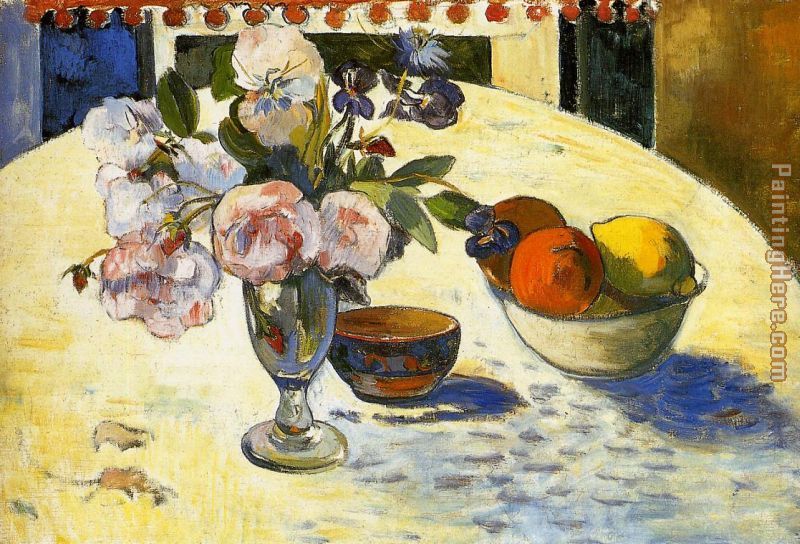
As an English major, I am constantly reminded how effective literature “de-familiarizes the familiar”, taking an everyday object or idea and somehow making it refreshing and interesting again. Viktor Shklovsky discusses how poetry and prose can take ordinary, almost mundane ideas and make them profound again. He explains, “By this algebraic method of thought we apprehend objects only as shapes with imprecise extensions; we do not see them in their entirety, but rather recognize them by their main characteristics,” (Rivkin, 15). Personally, I see this concept of “algebrization” as an everyday behavior in all aspects of human life. Eventually, by definition of this idea, every behavior will become habitual and formulaic, rather than a joyful task. Although at first this concept saddened me, it also became a personal “wake-up call". Every task I do has almost become routine, allowing me to lose interest in activities I may have previously enjoyed. Through Shklovsky’s theory, I may be able to decrease the amount of “algebrization” I do in my life. If an individual (not unlike myself) takes themselves away from their habitual behaviors, even for a moment, they will be able to see the appeal to the behavior in the first place. Art is supposed to be that moment away from your behavior. By hearing or seeing an everyday object in this new perspective, an individual is intrigued once more.
As an English major, I am constantly reminded how effective literature “de-familiarizes the familiar”, taking an everyday object or idea and somehow making it refreshing and interesting again. Viktor Shklovsky discusses how poetry and prose can take ordinary, almost mundane ideas and make them profound again. He explains, “By this algebraic method of thought we apprehend objects only as shapes with imprecise extensions; we do not see them in their entirety, but rather recognize them by their main characteristics,” (Rivkin, 15). Personally, I see this concept of “algebrization” as an everyday behavior in all aspects of human life. Eventually, by definition of this idea, every behavior will become habitual and formulaic, rather than a joyful task. Although at first this concept saddened me, it also became a personal “wake-up call". Every task I do has almost become routine, allowing me to lose interest in activities I may have previously enjoyed. Through Shklovsky’s theory, I may be able to decrease the amount of “algebrization” I do in my life. If an individual (not unlike myself) takes themselves away from their habitual behaviors, even for a moment, they will be able to see the appeal to the behavior in the first place. Art is supposed to be that moment away from your behavior. By hearing or seeing an everyday object in this new perspective, an individual is intrigued once more.
Tuesday, February 2, 2010
Sublime on a Ship
Although it may be one of the most cliché clips in film history, Titanic’s infamous “I’m flying” scene proves to be a true example of Longinus’s sublime. Longinus explains one reason why such a clip depicts the sublime, “For a piece is truly great only if it can stand up to repeated examination, and if it is difficult, or rather, impossible to resist its appeal, and it remains firmly and ineffaceably in the memory,” (Longinus, 120). Despite its alleged “cheesiness”, this clip continues to have its appeal; the characters are overwhelmed by the environment around them. Longinus explains that a sublime experience can never be anything but its own sublimity, nothing to examined differently. All agree that it is this remarkable scenario that proves greater than the characters themselves.
The scene opens with Jack meeting up with Rose. Immediately as Rose steps onto the tip of the ship, all communication is eliminated. The characters are instantly caught up in the sublimity around them. Longinus’s explanation fits this scenario perfectly. He explains that the true sublime experiences lies in the acceptance of an overwhelming natural greatness as well as a realization in an individual’s existence. He says, “For this reason the entire universe does not satisfy the contemplation and the thought that lies within the scope of human endeavor, our ideas often go beyond the boundaries by which we are circumscribed, and if we look at life from all sides, observing how in everything that concerns us the extraordinary, the great the beautiful play the leading part, we shall soon realize the purpose of our creation (Longinus, 155). Jack and Rose recognize the greatness among the ocean waves meeting the open sky. It is at this moment that the audience sees these characters recognize their existence upon the natural world. The conflicts that they have grown so wrapped up in throughout the movie appear meaningless when compared to this sublimity. The sublime goes beyond all limits of each characters’ lives. Those boundaries that created a division among the characters is eliminated. Instead, the characters are bound together by their acceptance in the overwhelming natural world. Longinus explores this concept. He describes, “ For when men who differ in their pursuits, their ways of life […..] and their manners all think one and the same way about the same works, then the unanimous judgment,[…..] of discordant voices induces a strong and unshakable faith in the object of admiration,” (Longinus,120).
This clip depicts all the true elements of the sublime. This type of experience is supposed to take an individual away from their current perspective and prove that there is an overwhelming greatness that exists in the world. This scene illustrates that the sublime eliminates all predispositions about society, reminding every person that he/she is only a small existence in nature. Whether it be P.B. Shelly’s experience in his poem “Mont Blanc” or James Cameron’s depiction of Titanic, the sublime proves to be a overwhelming experience that awes anyone who witnesses it.
Works Cited
Murray, Penelope, and T. S. Dorsch. Classical Literary Criticism. London: Penguin, 2000. Print.
The scene opens with Jack meeting up with Rose. Immediately as Rose steps onto the tip of the ship, all communication is eliminated. The characters are instantly caught up in the sublimity around them. Longinus’s explanation fits this scenario perfectly. He explains that the true sublime experiences lies in the acceptance of an overwhelming natural greatness as well as a realization in an individual’s existence. He says, “For this reason the entire universe does not satisfy the contemplation and the thought that lies within the scope of human endeavor, our ideas often go beyond the boundaries by which we are circumscribed, and if we look at life from all sides, observing how in everything that concerns us the extraordinary, the great the beautiful play the leading part, we shall soon realize the purpose of our creation (Longinus, 155). Jack and Rose recognize the greatness among the ocean waves meeting the open sky. It is at this moment that the audience sees these characters recognize their existence upon the natural world. The conflicts that they have grown so wrapped up in throughout the movie appear meaningless when compared to this sublimity. The sublime goes beyond all limits of each characters’ lives. Those boundaries that created a division among the characters is eliminated. Instead, the characters are bound together by their acceptance in the overwhelming natural world. Longinus explores this concept. He describes, “ For when men who differ in their pursuits, their ways of life […..] and their manners all think one and the same way about the same works, then the unanimous judgment,[…..] of discordant voices induces a strong and unshakable faith in the object of admiration,” (Longinus,120).
This clip depicts all the true elements of the sublime. This type of experience is supposed to take an individual away from their current perspective and prove that there is an overwhelming greatness that exists in the world. This scene illustrates that the sublime eliminates all predispositions about society, reminding every person that he/she is only a small existence in nature. Whether it be P.B. Shelly’s experience in his poem “Mont Blanc” or James Cameron’s depiction of Titanic, the sublime proves to be a overwhelming experience that awes anyone who witnesses it.
Works Cited
Murray, Penelope, and T. S. Dorsch. Classical Literary Criticism. London: Penguin, 2000. Print.
Subscribe to:
Posts (Atom)